
The Illusion of Progress: Agentic Tools Won’t Fix Your Product Strategy
Speed is only valuable if you're pointed in the right direction...

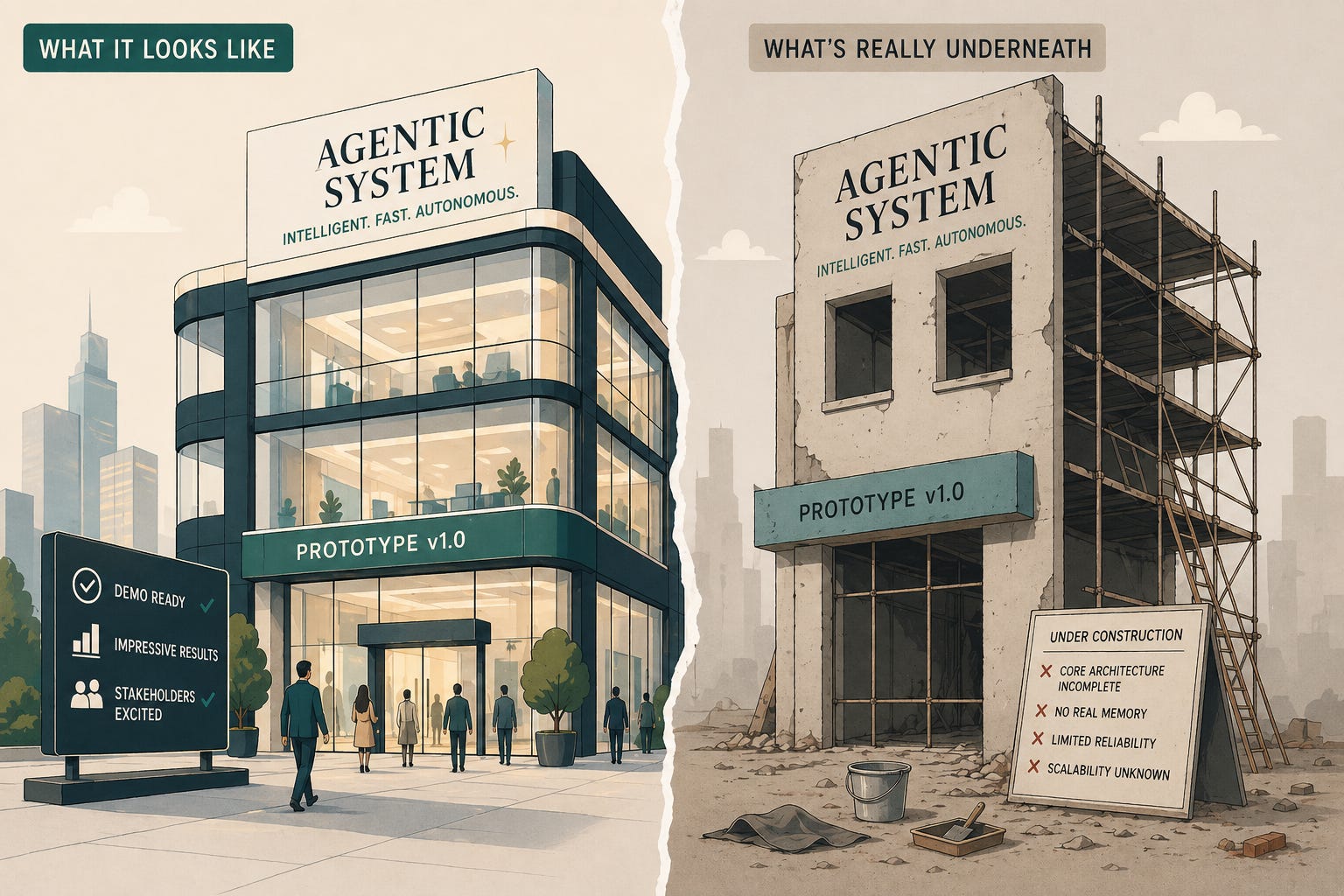
Vibe coding is genuinely exciting. The ability to go from idea to working prototype in hours has changed how teams build, experiment and present ideas.
Tools like Claude Code, Claude Design, Figma Make and ChatGPT have compressed weeks of work into days. The productivity gains are real and I’ve seen them firsthand. But I’ve also found myself sitting in rooms asking a question that stops things in their tracks: “who is this actually for?” That question, asked late enough, is an expensive one.
I’ve come to believe these tools can accelerate learning, but only if you’re intentional about what you’re trying to learn. Without that intention, they create something more dangerous than a bad product. They create the illusion of progress.
Productivity Vs Clarity
Speed is only valuable if you’re pointed in the right direction. Used without intent, it delays the hard questions rather than answering them. What problem are we solving? For whom? What value are we actually creating?
There’s also a subtler risk that doesn’t get talked about enough. The excitement of fast execution can distract teams from questioning how they’re working in the first place. I’ve seen vibe coding quietly enable some really old fashioned thinking. Big reveals, late feedback, no iteration with real users. The tools are modern but the process underneath hasn’t moved. You can have a Claude Code project and still be running a waterfall.
Used intentionally though, a quick prototype can force the clarity conversation earlier, putting something tangible in front of users and stakeholders before anyone’s overcommitted. That’s where the real value lies.
The Fidelity Trap
Vibe coding produces something that looks sophisticated. That’s both the magic and the problem.
Without the right framing, what people see anchors their expectations. Stakeholders react to the demo, not the underlying problem. The product looks further along than the thinking is, and that gap quietly grows.
What makes this worse is that these tools will keep building beyond what you asked for. Extra features, unnecessary complexity, flows nobody requested. Before long you’ve drifted far from the core need and alignment across your team gets harder the further it drifts. I’ve watched teams spend weeks realising they’re no longer solving the problem they started with.
Used intentionally though, that same fidelity becomes a powerful alignment tool. Walk into the room saying “this is a learning tool, not a commitment” and it changes the whole conversation. The thinking needs to lead the fidelity, not chase it.
Build Momentum Vs Sunk Cost
The more impressive something looks, the harder it becomes to kill.
Teams get attached. Executives see a demo and assume you’re nearly done. Pivoting becomes politically difficult, not because of the code, but because of the expectations already set. Nobody wants to be the person who kills the impressive thing.
This is where the real cost of unintentional building shows up. Not in the hours spent vibe coding, but in the conversations that become impossible afterwards. Validate fast, learn fast, and be willing to kill fast. The danger is only when the build outruns the thinking.
Takeaways
These aren’t gatekeeping questions. They’re the things that make the build worthwhile.
→ What specifically am I trying to learn from this?
→ What problem or problems am I trying to solve?
→ Who is the user and have I spoken to them recently?
→ How far does this stretch from current ways of working and how will I reduce that friction?
→ What does success look like beyond “it looks good”?
Designers and product managers aren't made redundant by these tools. They're more necessary than ever. These tools don't remove the need for intentional product thinking. They make it more urgent.
Ruksana Shaukat works at the intersection of AI, design and strategy, formerly at McKinsey, Quantum Black and Imperial College. Follow her work on LinkedIn and Substack.